Inland Rail and Australia's Freight Corridor Projects: What They Mean for Civil Construction Jobs
Rail freight infrastructure doesn't generate the same headlines as Olympic stadiums or offshore wind farms but in terms of raw construction volume, workforce demand, and regional economic impact, it belongs in the same conversation. Australia's Inland Rail project is one of the largest freight infrastructure undertakings in the country's history, and it sits alongside a broader pipeline of rail corridor upgrades, freight hub development, and urban rail expansion that collectively represent years of sustained civil construction work.
For civil workers, plant operators, earthworks crews, and structural tradespeople looking to understand where the long-run project work sits, rail infrastructure is one of the clearest answers.
What Inland Rail Actually Is
Inland Rail is a 1,600-kilometre freight railway connecting Melbourne to Brisbane via regional Victoria, New South Wales and Queensland. It spans 12 sections across 30 local government areas and involves upgrading approximately 1,000 kilometres of existing track while building 600 kilometres of new line through regional and rural Australia.
The project's purpose is economic and logistical: cutting rail freight travel time between Melbourne and Brisbane from 33 hours to under 24, making rail freight genuinely competitive with road on the country's most important commercial corridor.
Some sections are already complete and operational. Others are in active construction. The remaining sections are in various stages of planning, environmental assessment and early works meaning the project's construction workforce demand will continue to roll across the country for the better part of the next decade.
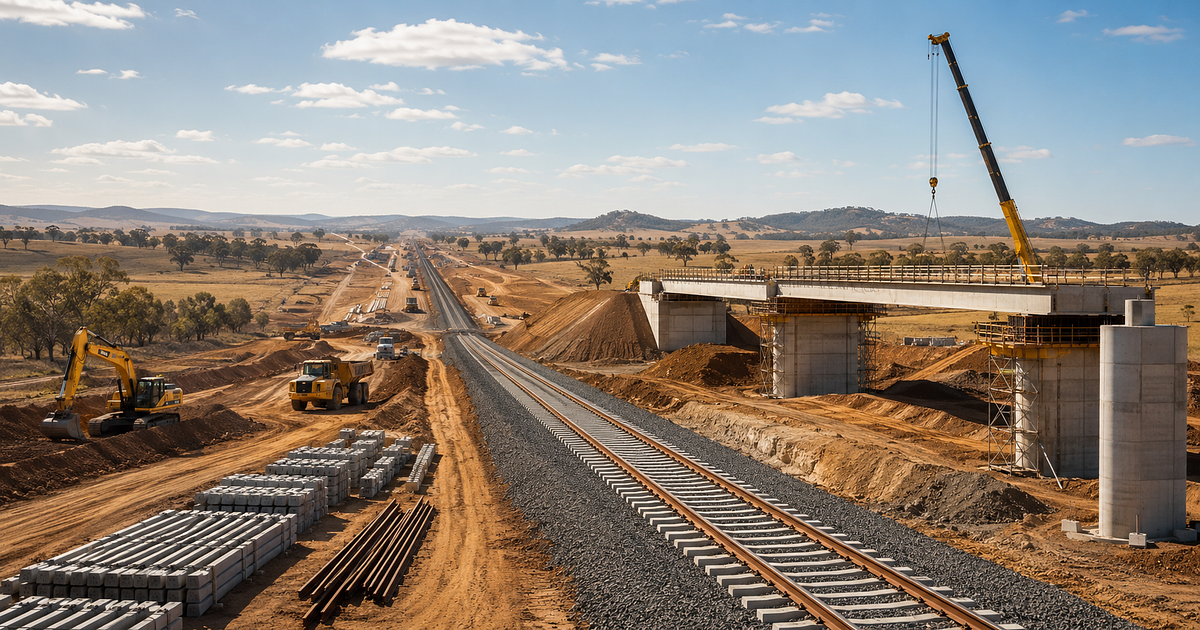
The civil construction scope across Inland Rail is substantial: earthworks and formation, ballast and track laying, culverts, bridges and viaducts, level crossing upgrades, tunnelling in some sections, and the associated civil infrastructure around freight terminals and intermodal hubs. For workers in civil labouring, earthmoving, concrete and structural steel, the project's regional spread means opportunities across three states over an extended period.
As part of Australia's broader $242 billion infrastructure pipeline, Inland Rail represents one of the most geographically dispersed civil construction programmes in the country — generating workforce demand in regional communities that wouldn't otherwise see this level of construction activity.
Urban Rail - The Other Side of the Pipeline
While Inland Rail drives regional civil demand, Australia's capital cities are simultaneously delivering their own significant rail construction programmes. Victoria's Big Build programme encompassing the Metro Tunnel, North East Link, and associated level crossing removals has been generating consistent demand for civil, tunnelling, structural and M&E trades for several years. Melbourne Airport Rail is progressing through planning and early procurement phases, adding a further major urban civil programme to Victoria's construction horizon.
In NSW, Sydney Metro West connecting the CBD to Parramatta via new tunnels and stations is one of the largest single urban infrastructure projects in the state's history, with a workforce requirement spanning tunnelling, civil, structural, M&E and fit-out trades across its construction phases.
Queensland's Cross River Rail project in Brisbane has been actively generating construction employment and is progressing toward operational readiness, with flow-on civil and fitout work continuing. The broader South-East Queensland transport corridor investment in the lead-up to the 2032 Games adds further rail and active transport infrastructure to an already busy construction market.
What the Civil Workforce Demand Looks Like
Rail infrastructure construction whether freight or urban has a specific workforce profile that differs from building construction or mining. The core demand centres on:
Earthworks and track formation
Large-scale excavation, embankment construction, and track bed preparation drive significant plant operation demand. Excavator operators, dozer operators, grader operators, and roller operators are all active contributors across rail corridor construction. This work is often regional and remote making FIFO and drive-in drive-out experience an advantage for workers targeting Inland Rail project packages.
Bridgework and structures
Rail lines cross rivers, roads and gullies generating demand for bridge construction crews including formwork carpenters, concreters, steel fixers and crane operators. The structural scope on a major rail corridor is considerable, with hundreds of individual structures across the full alignment.
Tunnelling
Urban rail projects in Sydney and Melbourne require tunnelling crews a specialised segment of the civil workforce that commands premium rates and is consistently in short supply. Tunnel boring machine (TBM) operators, shotcrete crews, and underground civil supervisors are among the most sought-after workers in the infrastructure market.
Track and rail installation
Track laying, welding, and track geometry work is specialist and relatively contained in terms of workforce numbers, but consistent throughout the project cycle. Rail welding in particular is a skill with very limited domestic supply.
Civil supervision and project management
The management layer across rail infrastructure package managers, site supervisors, HSE advisors, and project managers is under constant pressure. The supervisory workforce shortage is, in many ways, a more acute constraint on project delivery than the trade workforce shortage.
Regional Economic Impact Beyond the Job Numbers
One of the most significant features of Inland Rail and freight corridor projects is their regional economic footprint. Unlike urban projects that draw from an existing metropolitan labour market, regional rail construction activates local suppliers, generates accommodation and hospitality demand in nearby towns, and creates training and employment pathways for workers who might otherwise have limited access to large-scale project work.
For workers in regional NSW and QLD particularly, Inland Rail represents the kind of sustained, large-scale construction opportunity that regional communities rarely see. The scale of the project means it can absorb workers across multiple skill levels from general civil labourers through to experienced supervisors and project engineers.
What Workers and Employers Should Watch
For workers looking to position themselves for rail infrastructure work:
- Civil earthworks and plant operation experience is directly transferable to rail corridor construction
- Willingness to work in regional locations is a strong differentiator many rail project packages are in areas with limited local workforce supply
- Bridge and structures experience is highly sought and often commands premium rates on major rail projects
- For tunnelling, specialist training and experience is essential but for workers willing to pursue it, the demand is strong and the rates reflect it
For employers tendering on rail packages, workforce sourcing plans need to account for the regional location of most corridor work, the specialist nature of some scopes, and the competition from other major projects for the same civil workforce pool.
Browse current civil infrastructure and rail-related construction roles at Construction Jobs Australia