Victoria's Big Build: What Australia's Largest State Infrastructure Program Means for Workers
Victoria's infrastructure investment program branded as the Big Build has been the most sustained single-state construction effort in Australia's history over the past decade. Tunnels, rail, roads, hospitals, schools and social housing have all been delivered simultaneously under a program that at its peak represented more active construction than any comparable period in the state's history.
For construction workers, the Big Build has been a defining employment environment generating consistent demand for tunnelling crews, civil workers, building tradespeople, M&E trades, and project supervisors across metropolitan Melbourne and regional Victoria. Understanding what the program has delivered, what remains, and what's coming next is useful for workers and employers assessing Victoria's forward employment picture.
What the Big Build Has Delivered and What's Still Active
The Big Build is not a single project. It's an umbrella program covering major transport infrastructure across rail, road and active transport corridors. The headline projects include:
Metro Tunnel
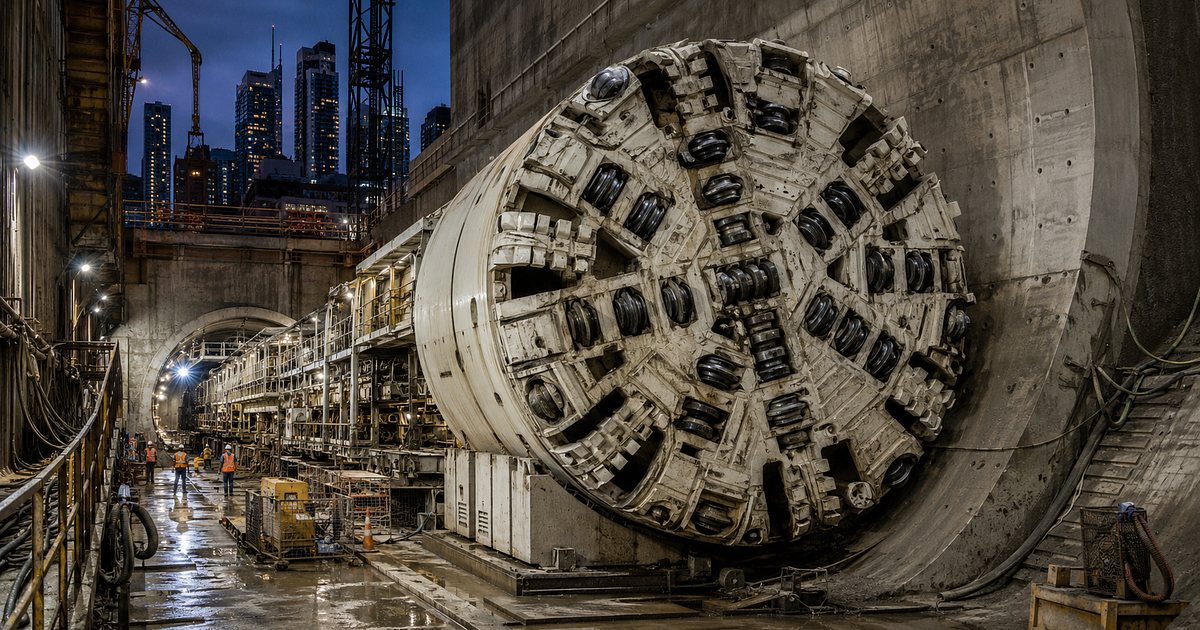
The Metro Tunnel is one of the most complex urban rail projects in Australian history a twin nine-kilometre tunnel beneath central Melbourne, connecting the existing Sunbury and Cranbourne/Pakenham lines with five new underground stations. Construction of the tunnels and stations has been the centrepiece of Melbourne's construction market for several years, generating demand for tunnelling crews, underground civil workers, structural tradespeople, M&E installers and fit-out trades. The project is approaching operational completion, transitioning the workforce from construction to commissioning and fitout phases.
North East Link
The North East Link a 6.5-kilometre motorway connection in Melbourne's north-east is one of the largest road infrastructure investments in Victoria's history. Twin tunnels, elevated motorway structures, and significant earthworks and civil scope are generating demand for a wide range of civil, structural and mechanical trades. This project is in active construction and represents a significant ongoing employment program for the Melbourne civil workforce.
Level Crossing Removals
The Level Crossing Removal Project (LXRP) has transformed Melbourne's suburban rail network and generated consistent civil, structural and track construction work across dozens of individual project sites over more than a decade. Works continue across multiple corridors and represent a rolling program of civil and building construction that has proved a reliable employer for Melbourne-based workers.
Regional Rail and Social Infrastructure
Beyond metropolitan transport, Victoria's program includes regional rail upgrades, hospital and health facility construction, schools, and social housing. The combined scope means the Big Build's workforce demand extends well beyond central Melbourne into regional Victoria.
The Workforce Profile Who the Big Build Needs
The Big Build's diversity spanning tunnelling, surface civil, building construction and fit-out means it draws from a broad workforce base. Key demand areas include:
Tunnelling specialists
Melbourne's Metro Tunnel and North East Link tunnelling works have generated one of the most active tunnelling employment environments in Australia's history. TBM (tunnel boring machine) operation, shotcrete application, underground utilities installation, and tunnel waterproofing are all specialist skills that have been in consistent demand and will continue to be as urban rail programmes continue nationally.
Civil earthworks and structures
Surface civil earthworks, drainage, retaining walls, bridge construction is the backbone of road and rail infrastructure delivery. Civil labourers, concreters, formwork carpenters, structural steel workers and plant operators are all active across the program.
M&E and fit-out trades
Rail stations, tunnels and complex transport infrastructure require substantial mechanical and electrical installation, followed by fit-out trades for public-facing spaces. As major tunnel and rail projects reach their later stages, the balance of work shifts from heavy civil toward M&E and fit-out a transition that creates demand for different trades as projects mature.
Supervision and project management
Victoria's Big Build has consistently highlighted supervision and project management capacity as a constraint. Site supervisors, package managers and project engineers are in demand across the programme, and the Big Build has run its own graduate and early-career programmes to support workforce development at the management level.
The Social Procurement Dimension
One distinctive feature of Victoria's Big Build programme is its social procurement framework a requirement that major project contractors deliver employment and training outcomes for disadvantaged community members, First Nations Australians, and other underrepresented groups.
This framework has generated genuine training and employment pathways for workers who might not otherwise access major infrastructure employment. It has also created obligations for contractors that affect how they structure their workforce with targets for apprentice employment, diversity hiring, and local content that go beyond standard commercial recruitment.
For workers from underrepresented communities including Aboriginal and Torres Strait Islander workers the Big Build's social procurement requirements have created structured pathways into the construction industry that weren't as accessible through conventional recruitment channels. Victoria's Big Build has publicly documented cases of First Nations workers accessing careers through the Eastern Freeway Upgrades and other program projects. Regional construction across Australia is increasingly incorporating similar employment frameworks as major projects spread beyond capital cities.
What Comes After the Current Peak
Victoria's Big Build is not a permanent state. The program's current peak defined by the simultaneous delivery of Metro Tunnel, North East Link, and multiple other major projects will moderate as these programmes complete over the next two to three years.
What remains after the current peak:
- Ongoing level crossing removals across remaining corridors
- Melbourne Airport Rail currently in planning, with construction anticipated to begin within the next few years
- Social infrastructure programmes health, education and housing construction remain active
- Regional transport upgrades across the state
The transition from peak to post-peak doesn't mean the work disappears. It means the intensity of Melbourne's construction market will moderate and workers who have built skills and track records on the Big Build will be well-positioned for the next phase of Victoria's infrastructure program, and for projects in other states that are ramping up as Victoria's peak subsides.
For Workers Considering Victoria
Victoria has offered one of the most consistent construction employment environments in Australia over the past decade. The Big Build has generated multi-year project stability, strong wages, and career development opportunities for workers across a wide range of trades and disciplines.
For workers currently on the program, the key question is sequencing understanding which projects are completing and which are ramping up, and positioning for the next phase before the current one finishes. The practical guide for workers moving into supervisory roles is particularly relevant for experienced Big Build workers who have accumulated project knowledge and site leadership experience across multiple programs.
Browse construction, tunnelling, civil and building roles across Victoria at Construction Jobs Australia.