Regional Construction Work in Australia: What to Expect and How to Make It Work
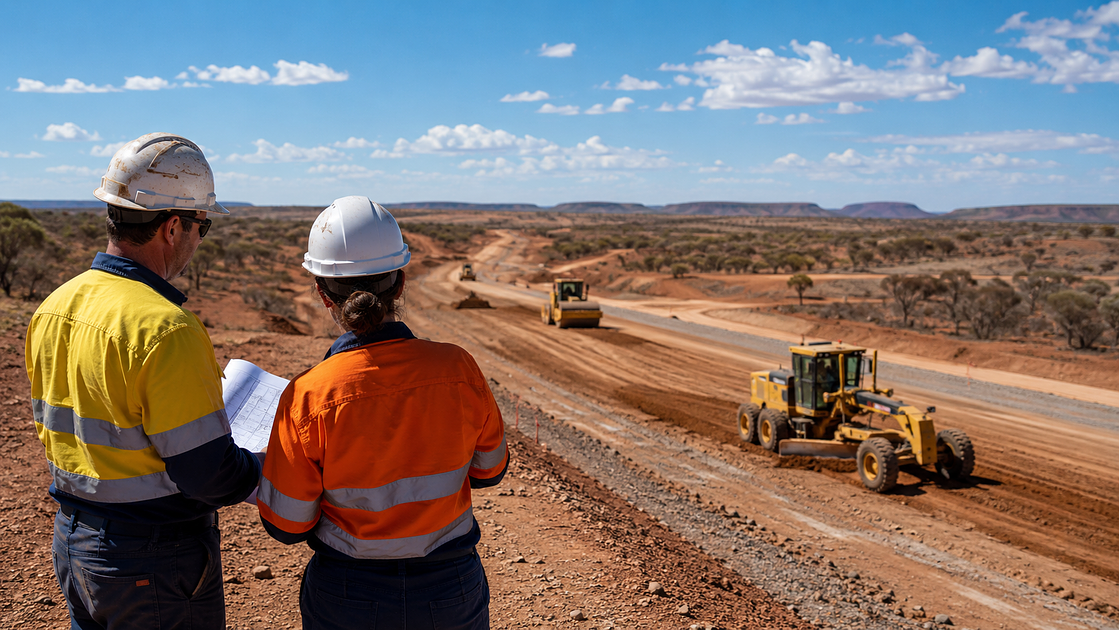
Australia's construction and infrastructure pipeline doesn't sit exclusively in Sydney, Melbourne and Brisbane. A significant portion of the country's most active building activity is happening in regional and remote areas and for workers willing to follow the work, the opportunities are genuinely good.
Regional construction work comes with its own set of realities. Pay is often higher. Conditions can be tougher. The lifestyle is different. But for the right worker, it can be a career-defining move financially and professionally.
This article covers what regional construction work actually involves, where the activity is concentrated, and what you need to know before committing to a regional move or posting.
Where Regional Construction Activity Is Concentrated
Not all regional areas are equal when it comes to construction activity. The strongest demand tends to cluster around a few key drivers:
Resources and mining infrastructure (WA, QLD, SA, NT)
Western Australia continues to generate substantial construction and civil work tied to resources iron ore, lithium, gold and LNG. The Pilbara, Goldfields and Kimberley regions have consistent demand for civil, mechanical, electrical and structural workers. Queensland's Bowen Basin and Galilee region drive similar demand. The Northern Territory has ongoing project activity across defence and resource infrastructure.
Renewable energy construction (SA, NSW, VIC, QLD)
Large-scale wind and solar farms are typically built in regional and rural areas where land is available. Battery storage, transmission line upgrades, and interconnector projects follow similar patterns. These projects generate substantial civil, electrical and structural demand and are increasingly active across south-east Australia and the eastern seaboard.
Roads and transport infrastructure (nationally)
Major roads programs are dispersed across regional Australia. Projects upgrading rural highways, bypasses around regional towns, and freight corridors generate civil labouring, plant operation, traffic management and concreting work often for extended periods in small regional communities.
Water and utilities (SA, QLD, NT, WA)
Dam upgrades, water treatment facilities, and pipeline projects are regularly underway in regional areas. These projects tend to be technically specific but often bring with them a broader civil workforce requirement.
How Regional Work Differs from City-Based Projects
Working regionally isn't just the same job in a different location. There are practical differences that affect your day-to-day experience and your planning.
Accommodation
Depending on the project, workers may be housed in temporary camps, permanent town-based accommodation, or caravans. Some regional projects provide accommodation and meals as part of the package. Others pay a living-away-from-home allowance (LAFHA) and expect you to arrange your own housing. Clarify this before you accept any role.
Supply and logistics
On remote or semi-remote projects, getting materials, parts and equipment to site takes longer. Project delays caused by supply issues are more common than in metro areas. Workers need to be flexible and comfortable with a pace that doesn't always match what you'd expect on a city site.
Social environment
Regional project towns can be small. If the project is the main employer in the area, you'll likely be living and socialising alongside your workmates. For some people this suits them well. For others, the lack of separation between work and downtime becomes a friction point over extended postings.
Pay and conditions
Regional and remote construction roles typically attract allowances on top of base rates distant work allowances, tool allowances, site allowances, and LAFHA in some cases. Across a full year, a regional posting with accommodation provided and consistent overtime can result in significantly higher savings than an equivalent city-based role.
The Practical Upside for Workers Who Plan Ahead
The workers who do well out of regional construction work are usually the ones who go in with a plan. A few things that make a real difference:
Have a savings goal
Regional and remote work creates the conditions for strong savings accumulation low living costs (if accommodation is covered), consistent hours, and allowances. Workers who go in with a clear financial goal paying off a vehicle, a house deposit, clearing debt tend to get more out of the experience and are less likely to burn out.
Manage your home base
If you have family, a mortgage, or other commitments at home, the logistics of an extended regional posting need to be managed in advance. Communication, financial arrangements, and knowing when you're coming back are all things that should be settled before you leave, not sorted mid-project.
Stay on top of your fitness
Long hours, physical work, heat, and limited access to good food make regional project work physically demanding over extended periods. Workers who look after their nutrition and get adequate rest recover better between shifts and stay productive longer.
Understand your exit
Know your contract terms before you commit. Is there a return flight provision? What happens if the project ends early? Is there a minimum tenure before you can access certain allowances? Knowing what you're signing is basic, but it's something a lot of workers skip.
Common Questions Workers Ask Before Taking a Regional Role
- Is accommodation and meals provided, or am I responsible for my own?
- What is the roster pattern and how does the swing work?
- Is there phone coverage and reliable internet on site or in camp?
- What is the travel arrangement fly, drive, or mixed?
- Are flights or travel costs covered, or am I paying my own way?
- What is the project duration and what happens if it finishes early?
- Is this direct hire or labour hire? Who do I actually work for?
- What is the process if I need to go home for an emergency?
Any employer offering a legitimate regional construction role will answer these questions clearly. If the answers are evasive or the conditions aren't spelled out in writing before you start, that's a warning sign worth heeding.
Regional Work Is Worth Considering If You're Ready for It
For workers at the right stage of life and career, regional construction work offers earning potential, career progression on major projects, and exposure to project types that simply don't exist in most capital cities. It's not for everyone but it's significantly underutilised by workers who could benefit from it.
Browse current regional and remote construction roles including infrastructure, civil, mining and renewable energy opportunities at Construction Jobs Australia. For experienced workers open to broader placement options, CJ Recruitment Global connects candidates with projects across regional Australia and internationally.