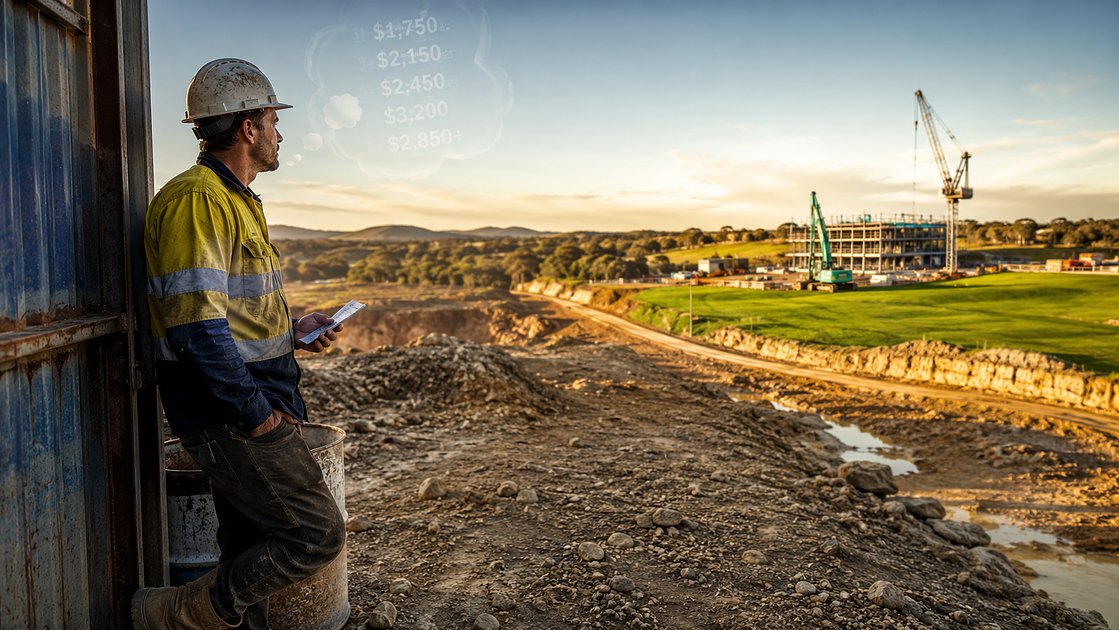
What Construction Workers Are Actually Worth Right Now
One of the most common questions among construction workers considering a move whether to a new employer, a new sector or a FIFO role is a simple one: am I being paid what I am worth?
The answer depends on where you are working, what you do and who you work for. But the overall picture across the Australian construction industry is one of rising wages, driven by genuine demand for skilled labour that shows no sign of letting up.
Here is a practical breakdown of what different construction roles are earning and what factors move the number up or down.
What drives pay differences in construction
Construction pay is not just about your trade or your title. Several factors significantly affect what you will earn:
- Location: Remote, regional and FIFO roles pay more than equivalent residential metro roles, reflecting the lifestyle trade-offs and difficulty of sourcing workers.
- Tickets and licences: Workers with multiple endorsements - a plant operator with excavator, dozer, grader and roller tickets, for example are worth considerably more than single-licence operators.
- Project type: Major infrastructure and resources projects tend to pay more than residential construction, reflecting the complexity, duration and scale of work involved.
- Employment model: Contract and labour hire arrangements often pay higher hourly or daily rates than direct employment, though they forgo leave entitlements and job security.
- Sector: Mining and resource sectors consistently pay more than residential construction for equivalent trade roles.
Indicative wage ranges by role
These are approximate guides - actual rates vary by state, employer, sector and experience:
- General labourer: $30 – $45 per hour (residential/metro), higher on major civil and mining projects
- Carpenter / joiner: $40 – $60 per hour
- Bricklayer: $45 – $65 per hour, higher for experienced workers with strong production rates
- Electrician / plumber: $45 – $70 per hour, depending on licence type and sector
- Concreters / formworkers: $38 – $60 per hour
- Civil plant operator: $40 – $70 per hour depending on endorsements and machine type
- Site supervisor: $120,000 – $180,000+ per year on major projects
- FIFO roles generally: $90,000 – $200,000+ depending on trade, experience and sector
Shutdown work and emergency maintenance roles often attract premium rates on top of base trade pay.
Are wages going up?
Yes - in most parts of the market. The tightening labour supply across construction trades and civil roles is translating into upward wage pressure. Workers in demand trades who are mobile, experienced and hold strong licences have real negotiating power at the moment.
This is particularly evident in civil and infrastructure work, where contractors on major projects are competing for the same pool of experienced site supervisors, civil engineers and plant operators. In some cases, daily rates for experienced operators on major projects have increased materially over the past couple of years.
What workers should do with this information
If you have not reviewed your rate against current market conditions recently, it is worth doing. Construction workers who stay with a single employer for years without reassessing their market value often fall behind. The workers who understand their worth and are willing to have that conversation or to take their skills to an employer who values them properly typically come out ahead.
Construction Jobs Australia is a useful place to see what employers are currently offering and to benchmark your own rate against live job listings. Browse current roles at Construction Jobs Australia.
For workers considering whether a FIFO or regional role is worth the trade-offs, see why FIFO workers are the backbone of Australia's remote construction and mining industry