Queensland’s Logan and Gold Coast Faster Rail Moves Into Delivery
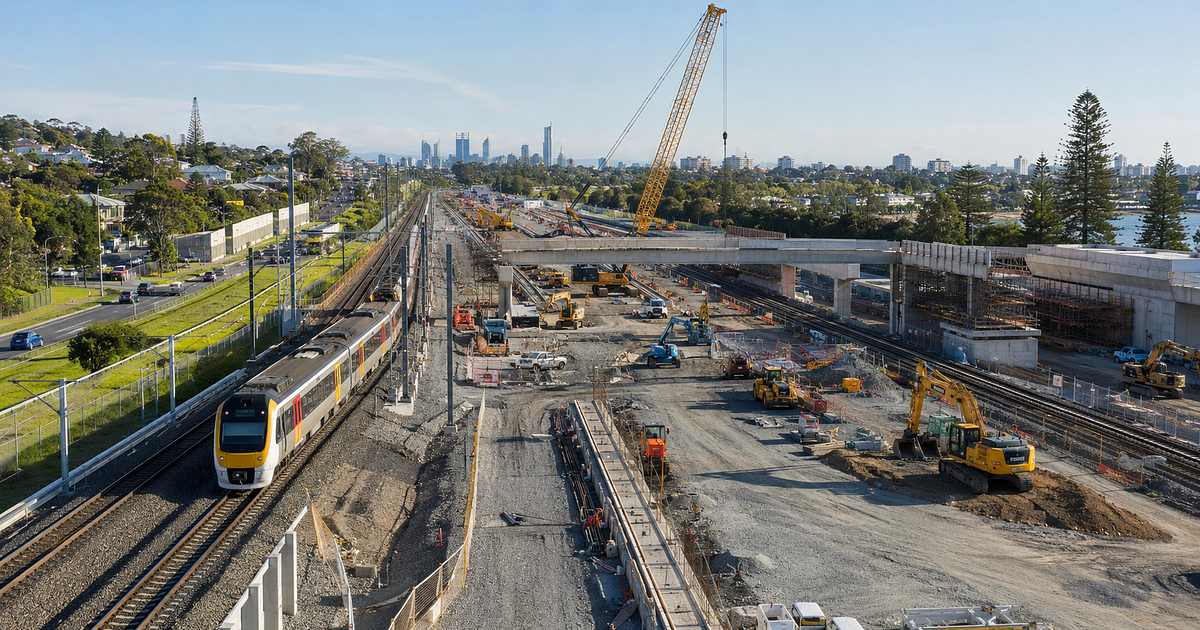
Queensland’s Logan and Gold Coast Faster Rail project is moving into its delivery phase, marking another major step for one of South East Queensland’s most important transport corridors. The $5.75 billion project will double the line between Kuraby and Beenleigh from two tracks to four, while also delivering station upgrades, level crossing removals, and wider corridor improvements.
For the construction and infrastructure sector, the project is important not just because of its scale, but because of the type of work it creates. Large rail projects typically bring activity across engineering, project management, commercial functions, planning, rail systems, and site delivery. They also tend to support a wider chain of subcontractors, suppliers, and specialist service providers.
The project is being delivered through the ActivUs consortium, which includes ACCIONA, CPB Contractors, UGL, SMEC and WSP, alongside TMR and Queensland Rail. Early investigations and site establishment are already underway, with major construction expected to follow later in 2026.
A major rail upgrade for South East Queensland
The Logan and Gold Coast Faster Rail project is designed to improve capacity on a corridor that has long been under pressure from growth. The route between Kuraby and Beenleigh is a critical section of the broader south-east Queensland transport network, linking Brisbane’s southern suburbs with the Gold Coast and supporting daily commuter demand.
The planned upgrade will duplicate the corridor from two tracks to four. That work is expected to improve service frequency, reduce congestion on the line, and support more reliable train operations over time. It also includes station upgrades, road and pedestrian changes, and level crossing removals, which means the job extends beyond rail track construction alone.
For the industry, that combination matters. It creates a multi-disciplinary project environment where civil, rail, structures, signalling, and operational teams all have to work together. Projects like this often generate steady demand for people who can manage complexity rather than just deliver a single scope in isolation.
What it means for the industry
This is the kind of project that has ripple effects well beyond the rail corridor itself. A large package like Logan and Gold Coast Faster Rail can influence hiring, contractor workloads, supplier activity, and the availability of experienced people across the market.
For job seekers, it may create opportunities in project engineering, commercial roles, planning, design coordination, stakeholder engagement, safety and delivery management. Rail systems specialists and people with live corridor experience are also likely to be in demand as the project progresses.
For hiring managers and recruiters, the project adds another layer of competition for experienced infrastructure talent in Queensland. Large transport programs often attract candidates who want long-term, stable work on visible public infrastructure, which can make it harder for other projects to hold onto the same skill sets.
Where opportunities may open up
The project is expected to support a broad range of roles as it progresses from early works into major delivery. Likely areas of demand include:
- Project managers and project engineers.
- Planning and scheduling professionals.
- Commercial managers and contract administrators.
- Rail systems and signalling specialists.
- Interface and stakeholder managers.
- Safety, assurance and quality personnel.
- Civil and structures engineers.
- Site-based leadership roles as construction ramps up.
It is also the kind of project where alliance-style delivery can create opportunities across both contractor and client-side environments. That often suits candidates who have worked across multiple stakeholders, coordinated complex interfaces or delivered work in live operational settings.
The broader market impact should not be overlooked either. When a project of this size gains momentum, it can lift demand for subcontractors, specialist consultants and support services across the region. That often means more opportunities for people who are not directly employed on the headline package but who still work inside the wider delivery ecosystem.
Why it matters now
The timing is important because early works and site establishment tend to shape the hiring market before the main construction phase begins. In practical terms, that means project teams, design groups, and commercial functions are often built first, with site-based roles increasing as delivery expands.
This project also sits within the wider Brisbane 2032 infrastructure context, which keeps South East Queensland firmly in focus for long-term transport investment. That backdrop gives the rail upgrade added significance, because it is not just about one line it is part of a broader transport response to population growth, network pressure and future event readiness.
For readers in the industry, the takeaway is straightforward: this is a significant project moving into a more active phase, and that usually means more movement in the labour market. Some will see it as a direct employment opportunity, while others will see it as a sign that the Queensland rail market remains busy and competitive.
Industry outlook
The Logan and Gold Coast Faster Rail project is a strong example of how major infrastructure can shape both transport outcomes and workforce activity at the same time. It is a visible public project with a long delivery horizon, a complex scope and a broad mix of disciplines involved.
For workers, that can mean new opportunities across engineering, commercial, planning and project delivery. For recruiters and hiring managers, it adds another major package to monitor in a market where experienced infrastructure talent remains highly mobile.
As the project moves deeper into delivery, it will be worth watching not only for the construction milestones, but also for the staffing patterns around it. That is often where the real market story starts to show.