Major Infrastructure Projects: Construction, Connectivity, and Defence Developments Across All States
Australia's construction and infrastructure sectors are bustling with activity, with each state and territory undertaking significant projects to enhance security, connectivity, boost economic growth, and improve the quality of life for residents. Here's a snapshot of the latest developments across the nation:
New South Wales (NSW):
Infrastructure NSW has recently released the updated NSW Major Infrastructure Pipeline and the 2023-2024 State Infrastructure Plan. This plan outlines the state's infrastructure program over the next five years, focusing on delivering more schools, hospitals, and public transport projects. The pipeline reflects a $116.5 billion infrastructure commitment over four years, emphasizing collaboration between government and private industry to deliver these projects.
Victoria (VIC):
Victoria's Big Build is progressing with several major projects:
- North East Link: This project is the largest investment in Melbourne's north-east, aiming to fix the missing link in the city's freeway network. The 6.5km tunnels from Watsonia to Bulleen are expected to take 15,000 trucks off local roads daily and reduce travel times by up to 35 minutes.
- Metro Tunnel Project: Set to open in 2025, the Metro Tunnel will create a new end-to-end rail line from Sunbury in the west to Cranbourne/Pakenham in the south-east, featuring five new stations and accommodating bigger, more modern trains.
Queensland (QLD):
Building Queensland continues to oversee significant infrastructure projects, including:
- Inland Rail: Inland Rail is a significant infrastructure project aiming to enhance freight connectivity between Melbourne and Brisbane. The project involves constructing a 1,600km freight rail line, with approximately 1,000km of existing track being upgraded and 600km of new track being built, passing through regional Victoria, New South Wales, and Queensland. The sections between Beveridge in Victoria and Parkes in New South Wales are prioritized for completion by 2027.
Western Australia (WA):
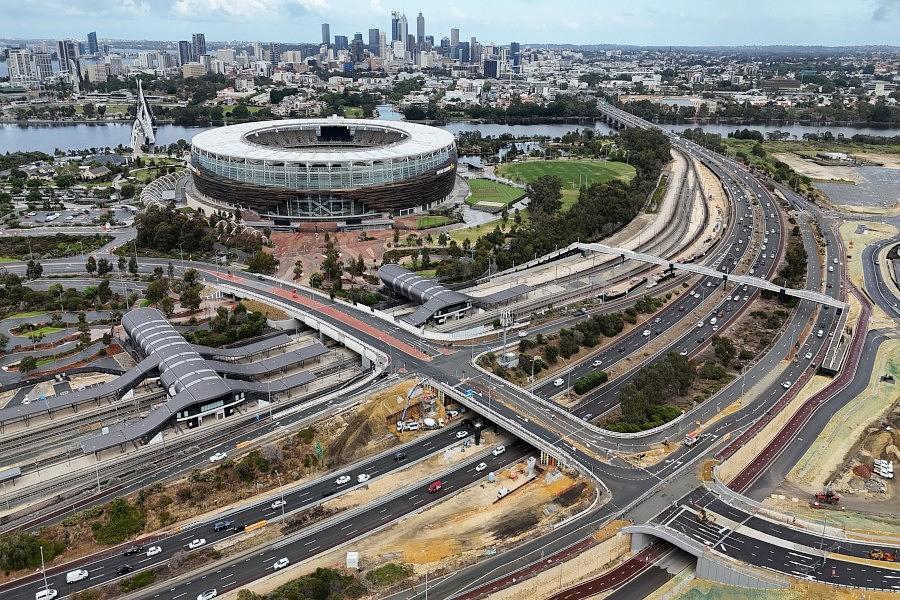
Main Roads Western Australia is actively managing the Belmont Park Redevelopment Project, which aims to enhance connectivity and accommodate future growth in the area. Key components of the project include:
- New Pedestrian Bridge: Construction of a footbridge over Graham Farmer Freeway to improve access between Burswood Park and the future Belmont Park development.
- Road Network Upgrades: Modifications to Victoria Park Drive and Goodwood Parade to support increased traffic volumes and improve safety.
- Shared Path Enhancements: Expansion of pedestrian and cyclist networks to cater to the growing population resulting from the redevelopment.
Construction commenced in April 2024 and is scheduled for completion by mid-2025. The project is jointly funded by the State Government and the developer, Golden Sedayu.
South Australia (SA):
South Australia is making significant strides in bolstering its defence infrastructure, aligning with the state's strategic growth objectives. Key developments include:
- Osborne Naval Shipyard Expansion: The Osborne Naval Shipyard, recognized as one of the most advanced naval shipbuilding facilities globally, is undergoing substantial expansion to accommodate the construction of SSN-AUKUS submarines. This expansion is set to triple the shipyard's size, enabling simultaneous production of large surface combatant vessels and nuclear-powered submarines.
- RAAF Base Edinburgh Enhancements: A $200 million project has commenced to build a new hangar at the Edinburgh Precinct, designed to upgrade and modify defence aircraft, specifically the P-8 Poseidon. The hangar, measuring 240 meters in length and 60 meters in width, is expected to be completed by mid-2026, creating approximately 450 construction jobs and supporting about 50 new highly-skilled positions upon completion.
- Defence Industry Headquarters Relocation: BAE Systems Australia is relocating its headquarters to Lot Fourteen in Adelaide, becoming a key tenant in the Innovation Centre. This move involves 500 workers and aligns with BAE's ongoing multi-billion-dollar defence projects, such as the construction of frigates and nuclear-powered submarines. Additionally, BAE aims to recruit 800 new employees within a year to support the $368 billion AUKUS submarine project.
These initiatives underscore South Australia's commitment to enhancing its defence capabilities and infrastructure, positioning the state as a central hub for defence activities in Australia.
Tasmania (TAS):
Department of State Growth is overseeing several projects aimed at improving transport and connectivity:
- Bridgewater Bridge Replacement: This project involves constructing a new bridge to replace the existing one, enhancing safety and reducing congestion. Construction is underway, with completion anticipated in 2025.
Northern Territory (NT):
Department of Infrastructure, Planning and Logistics is advancing projects to boost regional development:
- Middle Arm Sustainable Development Precinct: This initiative focuses on developing a sustainable industrial precinct to support emerging industries and create 1000s of jobs. Recent updates highlight ongoing planning and stakeholder engagement efforts.
Dept. of logistics & infrastructure
Australian Capital Territory (ACT):
Major Projects Canberra is progressing with:
- Light Rail Stage 2A: Extending the light rail network from the city to Commonwealth Park, with construction expected to commence soon, aiming to enhance public transport connectivity.
iCBR.
Driving Progress Across the Land
These projects highlight Australia’s forward-looking commitment to building resilient infrastructure, designed not only to meet the country’s future demands but also to position it competitively on the global stage. From expansive rail links and sustainable urban redevelopment to world-class naval shipyards and advanced defence facilities, each state is laying a foundation for long-term security and prosperity in a shifting geopolitical landscape.
For professionals in the construction industry, the coming decade offers unprecedented opportunities to play a role in this transformation. As Australia invests in its infrastructure with an eye toward both domestic growth and international stability, skilled workers and project leaders will find plentiful prospects to shape the future and bolster the nation’s strength in an increasingly interconnected and challenging world.