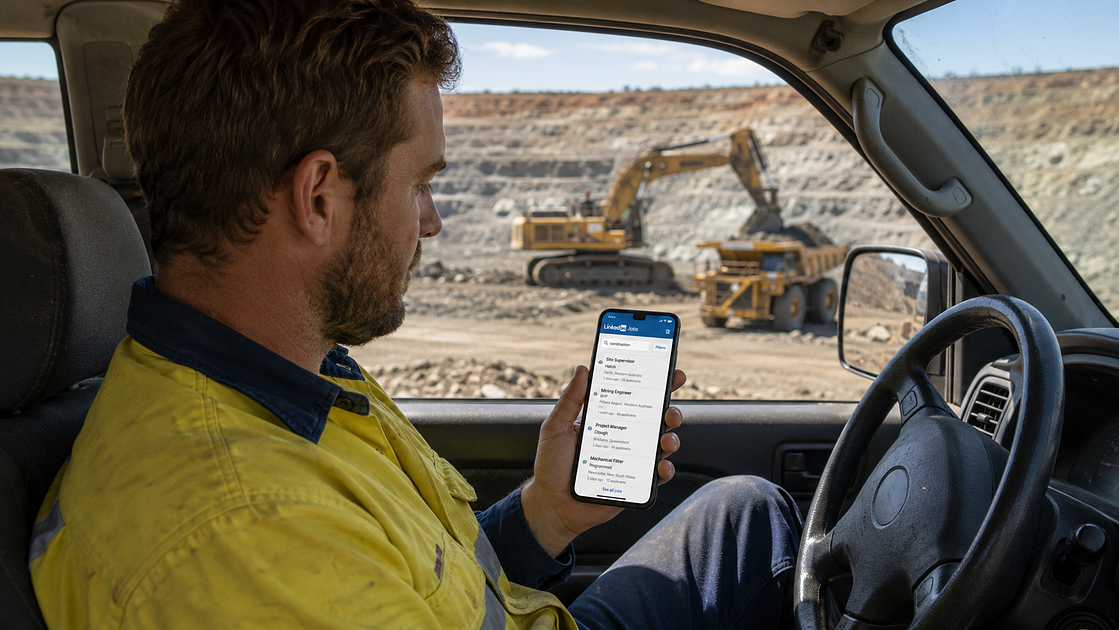
How to Use LinkedIn to Find Construction and Mining Jobs in Australia
LinkedIn isn't just for office workers in suits. It's become one of the most actively used platforms in the Australian construction, civil and mining industries and a lot of site-based workers are missing opportunities because their profile either doesn't exist or doesn't reflect what they actually bring to the table.
This isn't about turning yourself into an influencer or posting daily updates about your mindset. It's about making sure that when a recruiter or project manager searches for someone with your skills, your name shows up and your profile gives them a reason to get in touch.
Why LinkedIn Matters for Trades and Site Workers
Most construction workers find jobs through word of mouth, referrals, or directly through job boards. LinkedIn adds another channel on top of these one that's increasingly used by recruiters for civil, infrastructure and mining roles.
Major labour hire firms, project-specific recruiters and in-house HR teams at tier one contractors actively search LinkedIn for candidates. If your profile is complete and accurate, you're visible to these searches even when you're not actively applying for work. That matters most in the months between projects, when you want inbound enquiries rather than spending time on cold applications.
LinkedIn is also useful for staying across industry news, following companies that are active in your sector, and maintaining a light professional presence that keeps you relevant in people's minds over time.
Setting Up a Profile That Actually Works
The goal of your LinkedIn profile is simple: make it easy for a recruiter to understand what you do, what you're qualified for, and whether it's worth making contact. You don't need to be a writer to do this well.
Profile photo
Use a current, clear photo. You don't need a formal headshot a clean photo taken on a phone in natural light is fine. If you're comfortable, wearing a polo or company shirt works or even standing besides some work your proud of or operating your favourite machine. Avoid photos in dark locations, group shots, or anything too casual and not work related.
Headline
Your headline sits directly under your name and is one of the first things people read. Don't just put your job title. Add the most searchable keywords for your role:
"Plant Operator | Excavator / Dozer / Grader | Open Cut Mining | FIFO Available - WA & QLD"
"Civil Labourer | White Card | Traffic Control | Infrastructure Projects | SE QLD"
"Formwork Carpenter | Commercial Construction | Trade Qualified | NSW"
Think about the terms a recruiter would type into a search bar when looking for someone like you.
About section
A short paragraph here helps enormously. Three to five sentences explaining who you are, your background, your trade or skill area, and what kind of work you're looking for. Don't overthink it write it like you'd introduce yourself to a new site manager.
Experience section
Mirror your resume here. Company name, role, dates, and a few dot points on what you actually did. Include project names where relevant recruiters and employers searching for candidates on specific project pipelines will sometimes search by project name.
Licences and certifications
LinkedIn has a dedicated section for certifications. Use it. List your White Card, plant tickets, trade qualifications, first aid, and any other relevant credentials here. This information feeds into recruiter search filters.
The Connections That Actually Matter
On LinkedIn, the goal isn't to accumulate the most connections it's to have the right ones. For construction and mining workers, the most useful connections include:
- Former supervisors, foremen and project managers you've worked well with
- Recruiters who specialise in construction, civil or mining
- Labour hire company representatives and account managers
- Other trades and site workers in your area or sector
When you connect with a recruiter or labour hire contact, it's fine to send a brief message introducing yourself - what you do, what tickets you hold, and whether you're available or looking. Keep it short and professional. Most recruiters appreciate a direct, specific approach over a generic connection request.
Following the Right Companies
Following companies on LinkedIn is free and keeps you across job postings, project wins and hiring activity without you having to actively search. Companies worth following include:
- Major contractors active in your sector (Thiess, CPB, Downer, John Holland, Macmahon, MACA, etc.)
- Labour hire and recruitment firms that regularly place in construction and mining
- Project owners and government bodies whose projects drive hiring demand
When a company announces a contract win or project milestone, that often signals that hiring is imminent. Seeing those announcements early and reaching out proactively is more effective than waiting for a job ad to appear.
Engaging Without Overthinking It
You don't need to post original content to get value from LinkedIn. Even light engagement builds visibility over time:
- Like or comment on job postings in your sector the recruiter who posted it will see your name
- Share articles relevant to your trade or the projects you've worked on
- Congratulate people in your network on new roles or project completions
- Post an occasional update if you've completed a significant project, picked up a new qualification, or are available for work
That last one a simple post stating you've finished a project and are looking for your next role often generates direct recruiter contact within hours. The construction industry in Australia is a relatively small world, and visibility compounds over time.
What to Do If You Don't Have Much Work History Yet
If you're newer to the industry recently qualified, completing an apprenticeship, or transitioning from another sector your LinkedIn profile should be honest about where you are and clear about what you're working toward.
Focus on:
- Listing your qualifications and any tickets you hold
- Naming any work placements, labour hire gigs or short-term project work you've completed
- Making your location and availability visible
- Connecting with TAFE or trade school alumni who are already working in the industry
Early connections and visibility matter. The recruiter who sees your profile now will remember you when you have twelve months of site experience behind you.
A Simple Checklist Before You Go Live
- Professional or work related photo uploaded
- Headline includes role title, key skills and availability/location
- About section written - three to five sentences
- Work history matches your resume (including project types and locations)
- Licences and certifications section completed
- Connected with at least five relevant construction or mining industry contacts
- Following two to three companies active in your sector
- Contact preferences set to "open to work" or "open to opportunities" if actively looking
Start Simple, Stay Consistent
LinkedIn rewards consistency over intensity. You don't need to spend hours on it. Setting up a complete profile and checking in occasionally is enough to keep you visible and relevant in the industry.
Browse active construction, civil and mining roles at Construction Jobs Australia and use LinkedIn alongside job boards to build a pipeline of opportunities and stay up to date with industry moves particularly in the gaps between projects when having a visible professional profile does most of the work for you.
Here is our Linkedin Page you might find interesting updates that aren't on the jobs board, give us a follow.