Are You Being Paid Correctly? Navigating Australia's 2025 Construction Industry Award Rates
Australia's construction industry is governed by a comprehensive system of minimum wages and conditions, ensuring workers receive fair compensation for their skills and efforts. The Fair Work Ombudsman (FWO) oversees this system, providing guidance, resources and enforcement mechanisms to maintain compliance with workplace laws. As we progress through 2025, construction workers across all skill levels should be aware of their entitlements under various modern awards. This article examines the current minimum pay rates across key construction roles, helping workers and employers ensure compliance with Australia's workplace regulations.
Understanding Australia's Award System
The award system is a cornerstone of Australia's workplace relations framework, setting minimum pay rates and conditions for different industries and occupations. For the construction industry, several awards apply depending on the specific trade, location and type of work. The Building and Construction General On-site Award 2020 covers many construction workers, while specialized trades like electrical work fall under separate awards such as the Electrical, Electronic and Communications Contracting Award.
As of July 2024, the National Minimum Wage in Australia is $24.10 per hour or $915.90 per week. However, most construction workers are entitled to higher rates based on their skills, qualifications, and industry-specific awards.
The Role of the Fair Work Ombudsman
The Fair Work Ombudsman is an independent statutory office that promotes "harmonious, productive, cooperative and compliant workplace relations in Australia". The FWO provides resources for both employers and employees, including pay calculators, information about entitlements, and mechanisms for resolving workplace disputes.
In recent years, the FWO has taken a more aggressive stance against wage theft and underpayment. In 2024, they secured a record $15.3 million in penalties against the operators of Sushi Bay outlets for deliberately underpaying migrant workers. This demonstrates the serious consequences of non-compliance with Australia's workplace laws.
Recent Changes to Construction Industry Awards
The Fair Work Commission regularly reviews and updates award rates and conditions. Several significant changes have occurred or are scheduled to take effect in 2025:
- New wage theft provisions: As of January 1, 2025, employers who intentionally underpay employees can face criminal charges in addition to civil penalties.
- Changes to casual conversion: Starting February 26, 2025, casual employees can convert to permanent employment after six months of service if they believe they no longer meet the casual employee definition.
- Increases to minimum classification rates: From January 1, 2025, changes to minimum classification rates affect several awards, including the Electrical Award, where rates for Electrical Worker Grade 1 and certain apprentice classifications increased.
- Changes to modern awards below the National Minimum Wage: Nearly 50 awards have been varied to address issues with entry-level classifications falling below the National Minimum Wage.
- Casual loading increases: From April 26, 2025, casual pay rates for some awards (including the Building Trades and Labourers Construction Award) will increase as the casual loading rises to 25%.
Current Pay Rates in the Construction Industry
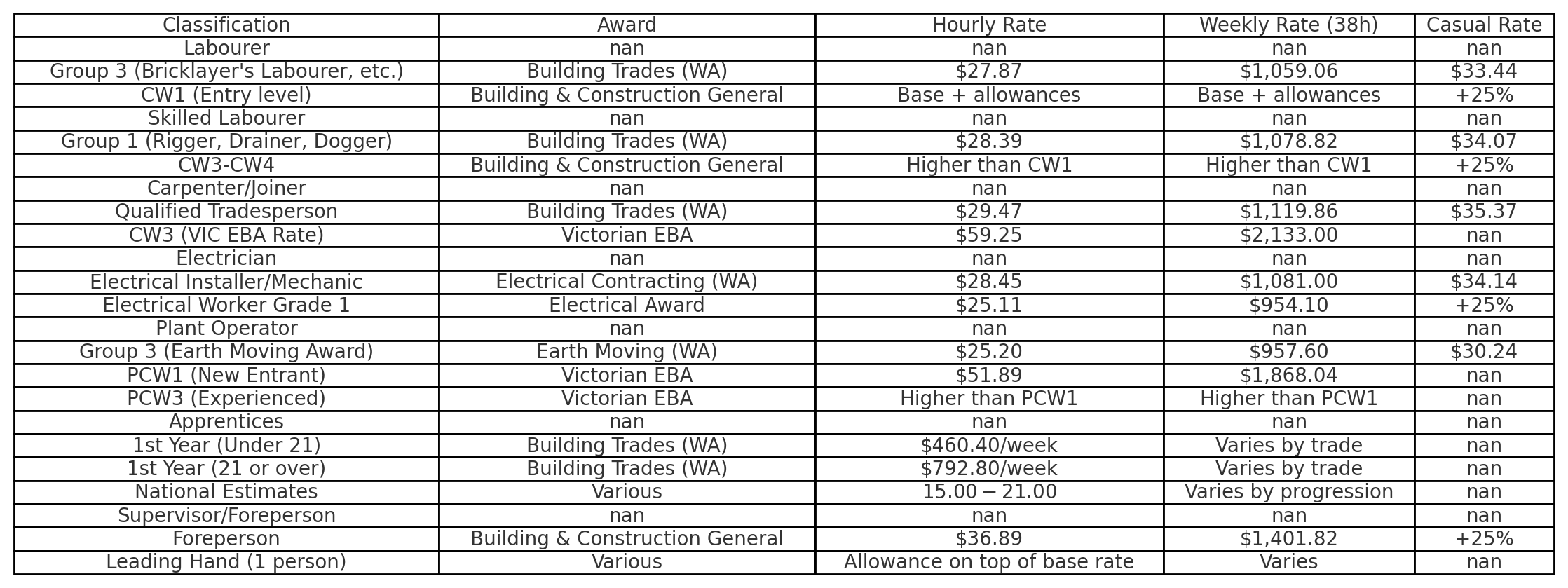
Below is a comprehensive breakdown of minimum pay rates for key construction roles as of early 2025. Note that these rates represent minimum entitlements under the relevant awards – many workers receive higher pay through enterprise bargaining agreements or over-award arrangements.
Construction Industry Pay Rates 2025
Understanding Your Entitlements
It's important to understand that the rates presented above are minimum entitlements. Many factors can affect your actual pay rate, including:
- Industry-specific allowances: Construction workers are often entitled to various allowances such as tool allowances, site allowances, travel allowances, and leading hand allowances.
- Enterprise agreements: Many construction sites operate under enterprise bargaining agreements (EBAs) that provide higher rates than the minimum award. For example, the Victorian EBA rates are significantly higher than the award minimums.
- Location: Some awards provide additional allowances for workers in regional or remote areas.
- Experience and qualifications: Pay rates typically increase with experience and additional qualifications.
Ensuring Compliance and Avoiding Underpayment
Both employers and employees have responsibilities when it comes to award compliance:
For Employers:
- Know your obligations: Ensure you understand which award applies to your employees and what rates and conditions you must provide.
- Keep accurate records: Maintain detailed records of hours worked, pay rates, and allowances paid.
- Stay informed about changes: Awards are regularly updated, so it's essential to stay informed about changes that might affect your obligations.
- Be aware of the consequences: The new wage theft provisions that came into effect in January 2025 mean that intentional underpayment can now result in criminal charges.
For Employees:
- Know your award: Understand which award covers your work and what minimum rates and conditions you're entitled to.
- Check your pay: Regularly review your pay slips to ensure you're receiving the correct rates, including any applicable allowances.
- Use FWO resources: The Fair Work Ombudsman provides tools like the Pay and Conditions Tool to help you calculate your entitlements.
- Raise concerns appropriately: If you believe you're being underpaid, raise the issue with your employer in the first instance. If the issue isn't resolved, contact the Fair Work Ombudsman.
Conclusion
Understanding and complying with Australia's construction industry award rates is essential for both employers and employees. The system is designed to ensure workers receive fair compensation while providing clarity for employers about their obligations.
The Fair Work Ombudsman plays a crucial role in educating stakeholders and enforcing compliance. With significant changes to workplace laws in 2025, including new wage theft provisions and casual conversion pathways, staying informed about your rights and obligations is more important than ever.
Whether you're a labourer, skilled tradesperson, apprentice or supervisor, knowing your minimum entitlements is the first step toward ensuring you're being paid correctly. For specific guidance on your situation, consult the relevant award or contact the Fair Work Ombudsman for assistance.
Work Smart, Work Safe!
Sources:
Building Trades and Labourers (Construction) Award summary1
Earth Moving and Construction Award summary3
Building and Construction General On-site Award 20207
Fair Work Commission - Building and Construction General On-site Award 2020 (PDF)9
Fair Work Ombudsman - Pay guides10
These sources provide detailed information on award rates, classifications, and recent updates to the construction industry awards in Australia.
;