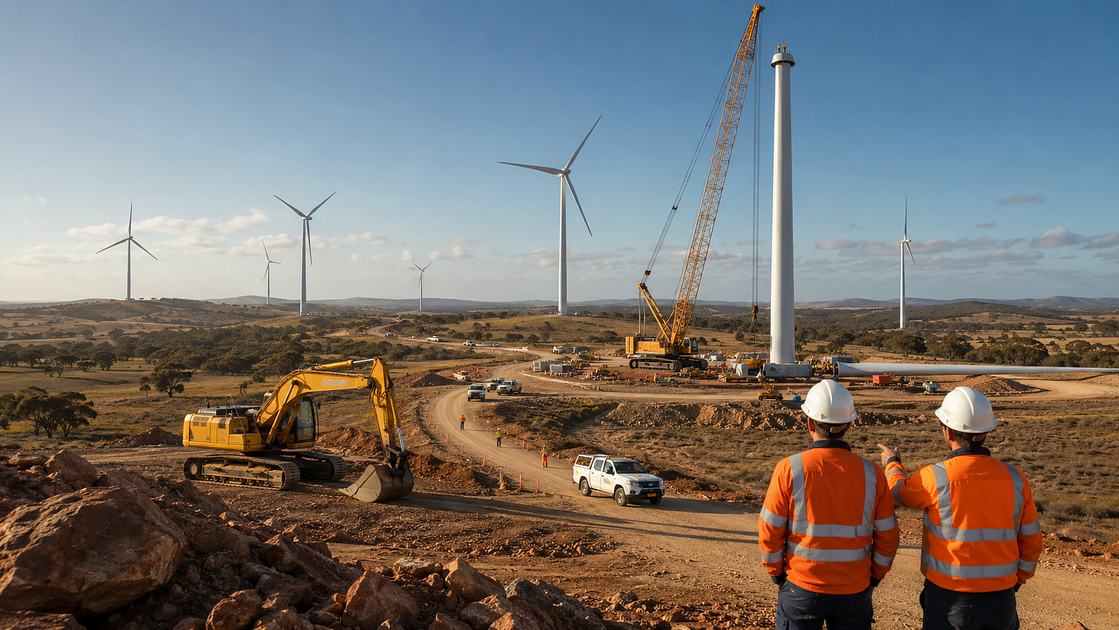
How the Renewable Energy Buildout Is Creating a New Wave of Construction Jobs
Australia's energy sector is going through one of the biggest transformations it has seen in a century. The shift away from coal-fired power and toward large-scale renewables is creating an enormous volume of construction work and that work needs people to deliver it.
For construction workers, civil contractors and employers planning their workforce, the renewable energy buildout is not background news. It is a major source of project activity, sustained hiring demand and genuine long-term opportunity.
The scale of what is being built
Australia has committed to significant renewable energy targets. Meeting those targets requires a massive physical build: utility-scale solar farms, onshore wind projects, offshore wind developments, pumped hydro storage, battery storage facilities and the transmission infrastructure to link it all together.
The transmission task alone is enormous. Thousands of kilometres of new high-voltage powerlines need to be planned, approved and constructed through regional Australia. Projects like Snowy 2.0, the various Renewable Energy Zones across NSW, Victoria and Queensland, and the Marinus Link between Tasmania and Victoria all represent multi-year, multi-billion dollar construction programmes.
What kind of construction work is involved
Renewable energy projects are not an entirely different type of construction they use the same core trades and skills as other major civil and infrastructure work. What changes is the context and the specific requirements of each project type.
Civil works: Solar and wind projects require substantial earthworks, road construction, drainage and site preparation. Large solar farms involve grading and compacting vast areas of land. Wind farms involve access road construction, crane pads and cable trenching through rugged terrain.
Electrical trades: The electrical content of renewable energy projects is high. Electricians, cable jointers, high-voltage specialists and substation workers are in significant demand. The connection of solar panels to inverters to switchboards to grid infrastructure requires a large and skilled electrical workforce.
Structural and mechanical: Wind turbine foundations involve significant concrete and steel work. Substation and battery storage facility construction involves structural steel, mechanical fitout and specialist electrical systems.
Heavy civil and plant operation: Earthmoving, road building, piling and drainage on large renewable sites requires experienced plant operators across a range of machines.
Transmission construction: High-voltage powerline construction is a specialist field but requires a broad civil and electrical workforce including line workers, riggers, civil crews and project managers.
Where the demand is coming from
New South Wales, Victoria and Queensland have the most active renewable energy pipelines at present. Western Australia's own energy transition is creating activity in the south-west and regional areas. South Australia, which has led the country in renewable penetration for years, continues to invest in storage and grid stability infrastructure.
Regional Australia is where most of this work physically occurs. Workers need to be mobile or willing to work FIFO to access most of these projects.
What it means for construction workers
For civil workers, plant operators, electricians and experienced construction professionals, the renewable energy sector represents a growing and durable stream of work. Unlike housing construction which cycles with interest rates and market sentiment the energy transition is driven by policy, investment commitments and physical necessity. It is not going away.
Workers who build experience on renewable energy projects are also building a skill set that is in demand globally. Australia is not the only country going through this transition the experience transfers.
What employers should be planning for
Construction employers who want to participate in the renewable energy market need to be thinking about workforce planning now. The peak of construction activity on many committed projects is approaching, and the competition for experienced civil, electrical and plant operators is already intense.
Building relationships with workers between projects, investing in additional tickets and training relevant to energy construction, and using platforms that reach the right candidate audience will all become more important.
Construction Jobs Australia lists civil, electrical, infrastructure and energy construction roles across Australia. Browse current renewable energy and civil opportunities at Construction Jobs Australia.
For more on where regional and FIFO construction demand is concentrated, read about regional construction in Australia: where the work is and why it matters.