Construction is Still Moving in 2026: What the Current Pipeline Means for Jobs
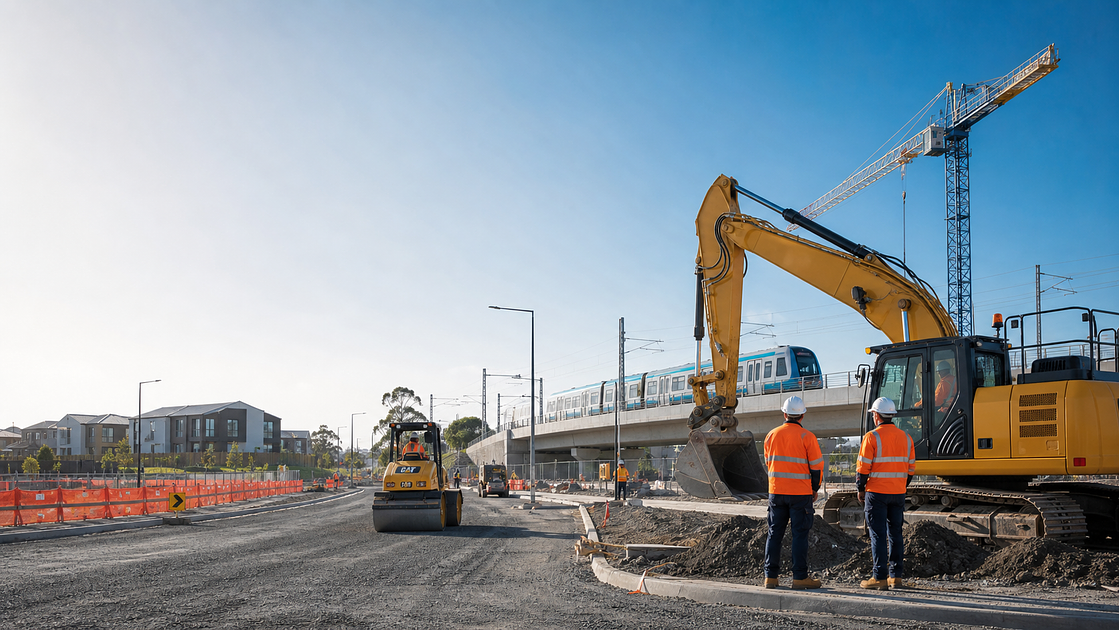
Australia’s construction sector continues to move, even as the market shifts from major announcements to the practical work of delivery. Across roads, rail, housing support, and major infrastructure programs, there is still plenty happening behind the scenes — and that has real implications for workers, employers, and recruiters.
What stands out most right now is that the industry is not in a pause phase. It is in a delivery phase. Projects are progressing, enabling works are continuing, and governments are still pushing ahead with infrastructure that supports future growth. At the same time, labour availability remains one of the biggest pressures on the sector.
For job seekers, that is a positive sign. Demand for reliable, skilled people remains strong across civil construction, rail, infrastructure support, and related trades. For employers, it reinforces a familiar challenge: finding enough good people, fast enough, to keep work on track.
A market still full of activity
Recent activity across the sector shows construction work remains widespread. For example, Victoria’s Big Build is a good example of how work is still moving, while federal attention is still being placed on roads, pipes, wires, and other enabling works tied to housing delivery. That kind of activity matters because it keeps labour demand broad rather than concentrated in just one part of the market.
This is important for the construction workforce because the strongest demand often sits around the less visible parts of the project cycle — the planning, civil, and early works stages that create ongoing need for machine operators, labourers, supervisors, engineers, and project support staff.
Labour remains the pressure point
The big issue for the sector is not simply project volume — it is people. Workforce shortages continue to be one of the main risks facing construction, and that shows up in delayed timelines, higher costs, and constant pressure on contractors to do more with less.
That has a few clear consequences:
- Good workers stay in demand.
- Employers need faster hiring systems.
- Contractors need dependable labour, not just applicants.
- Recruitment channels that actually reach job-ready candidates become more valuable.
For anyone hiring in construction, civil, or mining, the takeaway is straightforward: if the project pipeline stays active, the need for talent stays active too.
What this means for the market
This kind of environment usually rewards businesses that are organised, responsive, and realistic about hiring. The companies that win are often the ones that can move quickly, communicate clearly, and keep candidates engaged before they drift elsewhere.
It also creates a strong case for ongoing workforce visibility. Even when a business is not actively hiring for every role, regular market presence helps keep the pipeline warm and the brand visible to job-ready workers.
Starting a new regular series
This article is also the start of something simpler: a regular, practical construction update. Not a heavy industry report. Not a long-winded forecast. Just a steady source of useful commentary on jobs, projects, hiring demand, and what is happening across the market.
That approach suits where the sector is right now. People do not need more noise. They need clear signals about where the work is, where the pressure is, and what it means for hiring.
Construction Jobs Australia will be sharing more of these updates regularly as the year goes on.